A Strolling Guide To Newburyport’s South End Streets
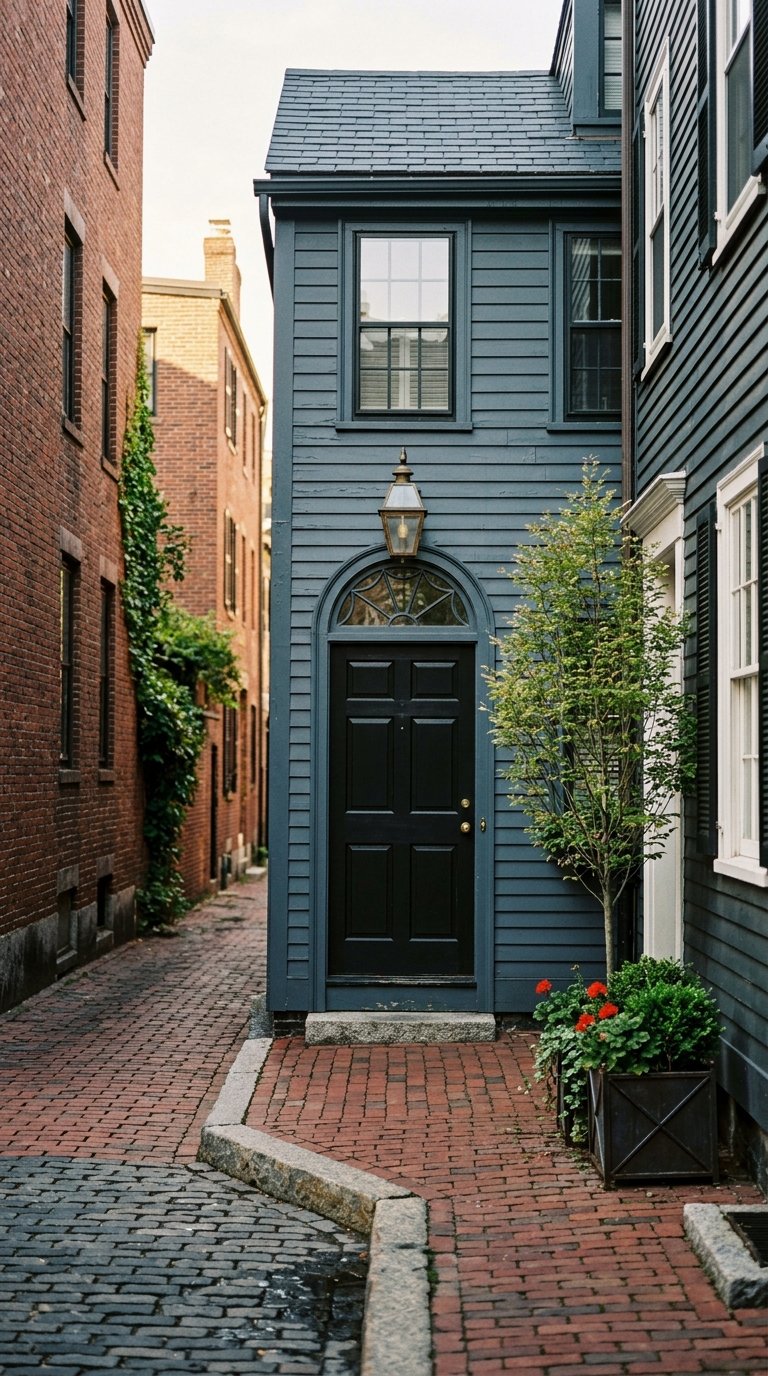
If you want to understand why Newburyport’s South End feels so distinct, start on foot. This is a neighborhood where the story unfolds block by block, from the waterfront inward, with early houses, later infill, and easy access to parks and the river all within a compact area. Whether you are exploring for the first time or thinking about buying in the neighborhood, this strolling guide will help you notice what makes the South End special. Let’s dive in.
The South End is one of Newburyport’s earliest-settled neighborhoods, shaped first by waterfront business activity like shipbuilding, commerce, and later mills. That working-waterfront history still helps explain the neighborhood’s layout, scale, and relationship to the river.
Today, the city treats the South End as part of Newburyport’s traditional neighborhood pattern and calls for preserving the historic character of older neighborhoods like this one. That matters if you are walking the streets now, because what you see is not just old housing stock. It is a neighborhood where historic character remains a central part of its identity.
The South End also sits within Newburyport’s larger historic district, which includes thousands of structures. Exact counts vary by source, but the broader point is clear: this is a large and significant historic setting, and many contributing properties may be subject to local overlay or demolition-control review.
A practical self-guided route is:
This sequence works well because it lets you start with the neighborhood’s maritime edge and then move inland through older residential streets and later architectural layers. It is one of the easiest ways to see how the South End changes from water-facing commercial history to a more varied residential pattern.
Water Street is the best opening scene for your walk. Here, you can see the South End’s maritime face most clearly, with a mix of early Federalist commercial buildings, wharf-related structures, and later Italianate and Colonial Revival work.
This stretch helps you understand the neighborhood’s original purpose. The South End did not begin as a purely residential enclave. It grew around economic activity tied to the waterfront, and Water Street still shows that connection in a direct, readable way.
If you are house hunting, this is also where the South End’s appeal starts to click. The combination of historic setting, waterfront proximity, and a compact street grid creates a lifestyle that feels both visually rich and highly walkable.
Ship Street gives you a strong look at some of the neighborhood’s oldest residential fabric. Historic district data sheets identify examples from roughly 1750 to 1800, including timber-frame gambrel forms, central-chimney houses, Federalist buildings, Greek Revival homes, and later Italianate additions to the streetscape.
What makes Ship Street interesting is not uniformity. It is the layering. You can read several eras of building history on one street, which is part of what gives the South End its texture.
For buyers, that variety is important. In the South End, value often comes from character, location, and scarcity rather than from a single architectural style repeated over and over.
Marlboro Street extends that sense of architectural layering. The street ranges from about 1750 central-chimney vernacular buildings through Federalist, Greek Revival, Italianate, Queen Anne, Arts & Crafts, and Colonial Revival forms.
That broad mix tells you something important about the neighborhood. The South End was not frozen in one period. It evolved over time, and each phase added another layer to the streetscape.
As you walk, look at rooflines, chimneys, window spacing, and entry details. Even without knowing every style name, you can start to see how the street reflects changing tastes and building methods across generations.
Federal Street is one of the clearest places to spot early domestic forms. District data sheets show a roughly 1750 central-chimney timber-frame house and a roughly 1790 twin-chimney gambrel, giving this stop a direct connection to Newburyport’s early-American architectural story.
This street is a good reminder that Newburyport is known for deep architectural history across multiple periods, including First Period, Georgian, Federal, and Greek Revival examples. In the South End, that history becomes especially approachable because it is visible at a neighborhood scale.
If you are considering an older home here, this is also where the idea of stewardship comes into focus. In historic areas, ownership often means balancing personal plans with local review considerations tied to contributing structures.
Lime Street introduces another set of architectural layers, including Georgian, late Georgian, Greek Revival, Queen Anne, and Italianate examples. By this point in the walk, the South End starts to show how broad its design vocabulary really is.
This matters because people sometimes think of historic neighborhoods as visually uniform. The South End is not. Its strength comes from the way different eras sit together in a compact, walkable area.
For buyers and sellers alike, that mix can shape value. Homes here are often judged not just by square footage, but by setting, period character, preservation context, and how they fit into the street as a whole.
Middle Street continues the story with Federalist and Italianate examples. It feels like a bridge between the earlier domestic forms you have already seen and the more mixed commercial and civic energy you encounter as you move farther along the route.
At this stage of the stroll, the South End can feel especially connected. You are never far from the water, yet the streets remain intimate and easy to navigate on foot.
That blend helps explain why the neighborhood attracts so much interest. The appeal is not only architectural. It is also about how quickly you can move between residential blocks, waterfront edges, and public open space.
State Street closes the loop with Federalist commercial blocks and later Victorian and storefront alterations. It is a fitting last stop because it brings together the South End’s layered history in one view.
By the time you reach State Street, the full pattern becomes clearer. The South End is a neighborhood shaped by commerce, residence, adaptation, and preservation over time.
That long arc is a big part of why the neighborhood feels so established. Most prime properties have already been developed, and city planning documents point to limited remaining opportunities along with an expectation that new work should complement historic streetscapes. For buyers, that helps explain the premium often associated with the South End.
The South End is not only about architecture. Its walkability is reinforced by parks and waterfront access points that make the neighborhood feel unusually connected to the river.
The city’s parks inventory includes Joppa Park, Cashman Park, and Perkins Park & 270 Water St. The city’s open-space planning materials describe Joppa Park as a linear waterfront park along the seawall with a public boat launch, Perkins Park as a neighborhood park with a playground, tennis courts, and a ballfield, and Cashman Park as a riverfront park with a state public boat launch.
For a casual stroll, those spaces give you places to pause and reset. For a buyer, they help define the day-to-day experience of living in the South End, where neighborhood streets open quickly to recreation and river views.
The Clipper City Rail Trail and Harborwalk strengthen the neighborhood’s sense of connection. According to the city, the 3.35-mile loop completed in 2024 links the commuter rail station, downtown waterfront, parks, and densely developed neighborhoods.
The boardwalk connection to Cashman Park and the trail corridor through the South End residential neighborhood give this area a practical advantage. You can enjoy the intimacy of a historic neighborhood while still feeling tied into the city’s broader network of public spaces.
That is part of the South End’s everyday appeal. It feels compact, but it does not feel isolated.
If you are considering a purchase in the South End, the neighborhood’s value is best understood through four factors:
In other words, the South End premium is usually not about new-construction amenity space. It is more often tied to setting, history, and the limited supply of homes in a well-preserved area.
That does not mean every property is the same. Condition, updates, lot characteristics, and exact location still matter. But if you are comparing the South End to other options, it helps to understand that buyers are often responding to a very specific blend of place and permanence.
If you own in the South End, your property sits within a neighborhood shaped by both history and local stewardship. That can support long-term appeal, but it can also mean that changes to contributing structures may involve local review under overlay or demolition-control rules.
For some owners, that is a practical consideration during renovation planning. For others, it is part of what protects the character that makes the neighborhood so valuable in the first place.
Either way, the South End rewards informed decision-making. Understanding the street, the setting, and the property’s place within the broader historic district can help you plan smartly whether you are preparing to sell, renovate, or simply evaluate your options.
If you are thinking about buying or selling in Newburyport’s South End, working with a team that understands historic context, preservation-sensitive properties, and the local market can make the process much clearer. For tailored guidance, neighborhood insight, and a thoughtful strategy, connect with Dolores Person.
Whether you're simply thinking of buying or selling a home, or know someone who is, we're here to ensure your real estate experience is a great one. Let us help you find your dream home or investment property.