How To Choose Your Walkable Newburyport Neighborhood
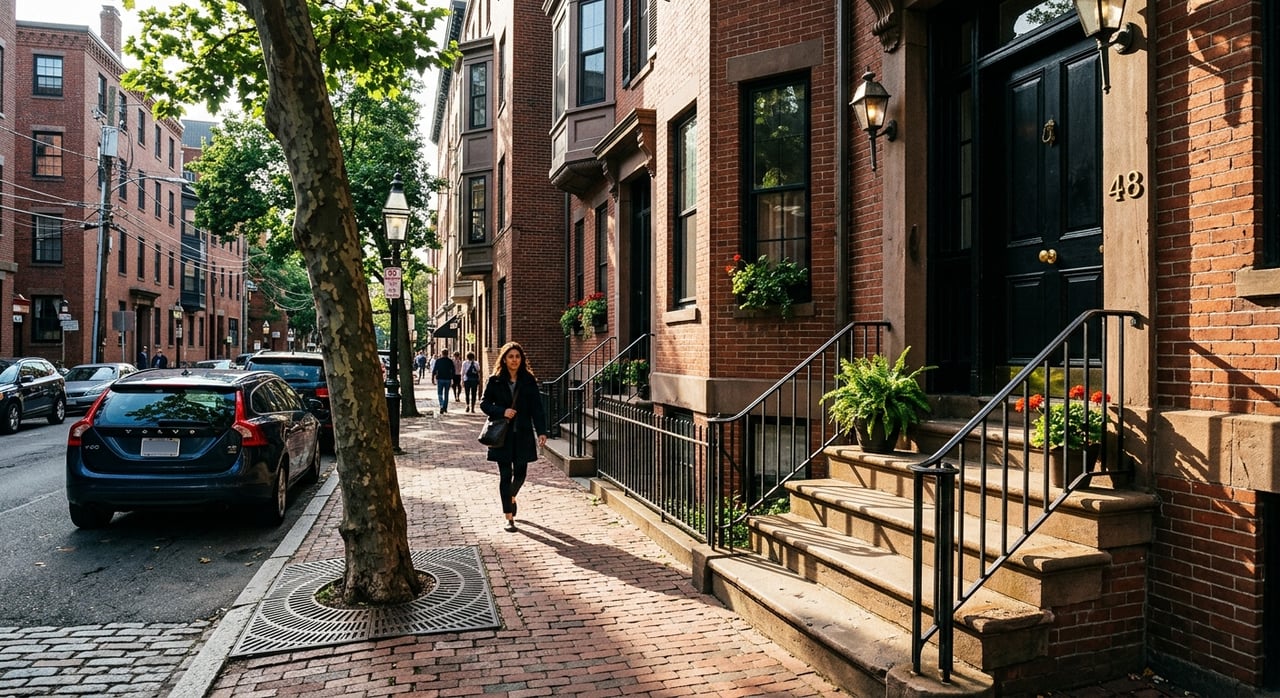
If you want a walkable Newburyport lifestyle, the hard part usually is not finding it. The real challenge is choosing which kind of walkability fits your daily routine. You may want coffee shops and the waterfront a few minutes away, or you may prefer a quieter residential street with easy access to trails and parks. This guide will help you compare Downtown, the South End, and the North End so you can choose the Newburyport neighborhood that feels right for the way you live. Let’s dive in.
In Newburyport, many of the most walkable in-town areas overlap with the city’s historic core. The city’s master plan describes this pattern as an urban core surrounded by traditional neighborhoods, and much of the South End, Downtown, and parts of the North End fall within the historic district. That means your decision often comes down to lifestyle tradeoffs, not whether a neighborhood is walkable at all. You can review that broader framework in the City of Newburyport master plan.
A helpful way to compare these neighborhoods is to think about how much of your day you want to complete on foot. Some buyers want the shortest possible walk to dining, errands, and the waterfront. Others want a little more separation from the busiest streets, along with more space, easier parking, or stronger access to parks and trails.
Before you focus on listings, think about how you want your week to feel. A walkable neighborhood can mean different things depending on whether you prioritize restaurants, transit, green space, or a more residential setting.
Ask yourself a few simple questions:
In Newburyport, those answers will usually point you toward Downtown, the South End, or the North End.
Downtown is Newburyport’s most compact mix of residential, civic, and commercial life. The city describes it as the historic commercial and civic center, with a pedestrian-oriented street pattern and a close mix of shops, restaurants, residences, and services. If your goal is to do as much as possible without getting in the car, Downtown gives you the most concentrated version of that lifestyle.
The area also has a strong cultural presence. According to the city’s Office of Arts, Tourism, and Cultural Affairs, Newburyport’s cultural district includes galleries, museums, theaters, cultural centers, and performance spaces. That helps explain why Downtown often feels more active and destination-oriented than nearby residential blocks.
Downtown benefits from a dense walking network. The city identifies places like Market Landing Park & Mathews Memorial Boardwalk, Inn Street Mall, Market Square Bullnose, Bartlet Mall, Cashman Park, and Joppa Park as part of or just beside the core. You can also use the Clipper City Rail Trail and Harborwalk network to connect the station, waterfront, and neighborhood destinations.
If you picture stepping out your door and walking to dinner, meeting friends, picking up basics, or heading toward the water, Downtown is often the easiest fit.
Downtown living comes with tradeoffs. The city’s master plan notes that parking is an issue in the core and highlights the need to address future parking demand. If you choose Downtown, you are typically choosing location and convenience over private parking ease.
You should also expect more activity. More foot traffic, more visitors, and a busier street environment are part of what make the area vibrant, but they may not be the right match if you want a quieter home setting.
Compared with the South End and North End, Downtown has the broadest mix of condos, mixed-use buildings, and smaller multifamily properties. In the city’s assessor snapshot used in the master plan, Downtown included 184 single-family homes, 89 condos, 52 two-family homes, 14 three-family homes, and 47 multifamily buildings. Structurally, that makes Downtown the clearest choice if you value proximity and convenience over yard size.
The Smart Growth District near the MBTA station is also worth watching if you want an in-town location with housing types that may feel newer or more efficient. The city says this district allows multifamily condos, rental apartments, and mixed-use buildings at a scale similar to Downtown Newburyport.
The South End often feels like the middle-ground choice. It offers strong walkability, but with a more residential street pattern than the blocks closest to Market Square and State Street. If you want to stay connected to Downtown while having a little more breathing room, the South End is often where that balance becomes clear.
The city’s master plan describes the South End as one of Newburyport’s oldest residential areas, shaped early by waterfront business activity such as shipbuilding, commerce, and later mills. That history helps give the neighborhood its character, while still keeping it closely connected to the urban core.
The South End remains tightly linked to the city’s larger walkable network. The city notes that Phase II of the Clipper City Rail Trail runs through the South End residential neighborhood and along the Merrimack River. In practical terms, that means many South End residents can walk or bike into Downtown while living in an area that feels less commercially intense.
For many buyers, this is the appeal. You can still enjoy restaurants, shops, and the waterfront, but your home base may feel more residential from block to block.
The South End stands out for outdoor amenities. Joppa Park and Cashman Park add riverfront and recreation options that matter to buyers who want more than storefront walkability. Joppa Park includes a lawn, benches, gardens, and a public boat launch, while Cashman Park offers fields, courts, a playground, an off-leash dog area, and additional boat-launch access.
If your ideal day includes both a walk to town and time outside by the river, the South End can be a very practical fit.
The South End has a mix of housing types, but it remains mostly single-family in composition. In the city snapshot, the South End included 671 single-family homes, 114 condos, 101 two-family homes, 21 three-family homes, and 20 multifamily buildings. That usually creates more variety than Downtown, with some streets close to the center and others that feel calmer and more residential.
In the South End, parcel-specific due diligence matters. The city’s 2025 FEMA flood maps and planning resources make clear that shoreline and low-lying areas should be reviewed carefully, especially closer to Water Street, the waterfront, or other river-adjacent blocks. Neighborhood name alone does not tell the full story, so it is important to evaluate a property on its own location and conditions.
The North End is generally the most residential of the three options. If you want an in-town Newburyport address but care more about neighborhood streets, detached homes, and green space than immediate storefront adjacency, this area often rises to the top.
The city’s master plan explains that the North End shares Newburyport’s early residential and maritime roots, but with less commercial and mill influence than the South End. That history still shows up in the area’s density and housing pattern today.
One of the North End’s biggest strengths is its relationship to parks and open space. The city’s park resources place Atkinson Common Upper and Lower, March’s Hill, and Moseley Woods in this part of town, while the master plan notes the connection between High Street, Bartlet Mall/Frog Pond, and larger green spaces farther upriver.
That helps define the neighborhood experience. In the North End, walkability often means combining daily errands with dog walks, playground time, or trail access rather than living directly beside the busiest retail blocks.
The city’s park guide highlights a strong outdoor profile here. Atkinson Common includes playgrounds, baseball diamonds, tennis courts, walkways, formal gardens, and a stone tower. March’s Hill offers wooded walking and biking trails plus a sledding hill, while Moseley Woods includes wooded trails and an off-leash area.
For buyers who want walkability with more greenery, the North End often feels like the best match.
Compared with Downtown, the North End is much more detached-house-heavy. In the city snapshot, the North End included 1,754 single-family homes, 211 condos, 144 two-family homes, 27 three-family homes, and 30 multifamily buildings. In practical terms, that often means more opportunity for yard space or driveways, with a slightly less immediate relationship to the restaurant and retail core.
Here is the simplest way to think about the choice:
This framework lines up with the city’s land-use pattern, housing mix, and transportation network. It is less about finding the “best” neighborhood and more about finding the best fit for your routine.
Price matters, but in Newburyport, it helps to think about value in terms of housing type, parking, and daily convenience. The research shows that Downtown has the strongest concentration of condos and multifamily housing, while the South End and North End lean more single-family. That means your decision may be less about headline neighborhood price and more about what you want your money to buy.
Do you want to pay for the closest possible access to dining, services, and transit? Or would you rather prioritize more interior space, outdoor space, or parking flexibility? Those tradeoffs are often more useful than broad neighborhood labels.
Directional market snapshots also show that the in-town market remains active and premium. The research report notes that, as of January 2026, Realtor.com showed Downtown Newburyport with a median home sale price of $1,347,450 and the South End at $1,295,000, while a June 2025 Rocket report placed the North End at a median sold price of $792,000. Because neighborhood boundaries vary by source, those numbers are best treated as directional rather than perfectly comparable.
Walkability in Newburyport is not just about shops and restaurants. It is also tied to transit and active transportation. The city notes that the MBTA Newburyport/Rockport Line station can be accessed by car, bus, biking, and walking, and that fare-free MeVa Routes 19 and 20 both serve Downtown Newburyport and the station.
That makes the station, rail trail, and Harborwalk part of the housing decision. If commuting or car-light living is important to you, this network can have a real impact on which neighborhood feels most practical.
The best walkable Newburyport neighborhood is the one that fits your real routine, not just your wish list. If you want the most immediate access to errands and dining, Downtown may be the right move. If you want walkability with a more residential rhythm, the South End may feel more balanced. If you want a greener, more house-focused setting while staying in town, the North End may make the most sense.
If you are comparing streets, home types, or lifestyle priorities in Newburyport, working with a team that knows the city block by block can make the process much clearer. Dolores Person can help you weigh neighborhood fit, property details, and local market context so you can make a confident move.
Whether you're simply thinking of buying or selling a home, or know someone who is, we're here to ensure your real estate experience is a great one. Let us help you find your dream home or investment property.