Understanding the OSRD Subdivision on Essex Park Road
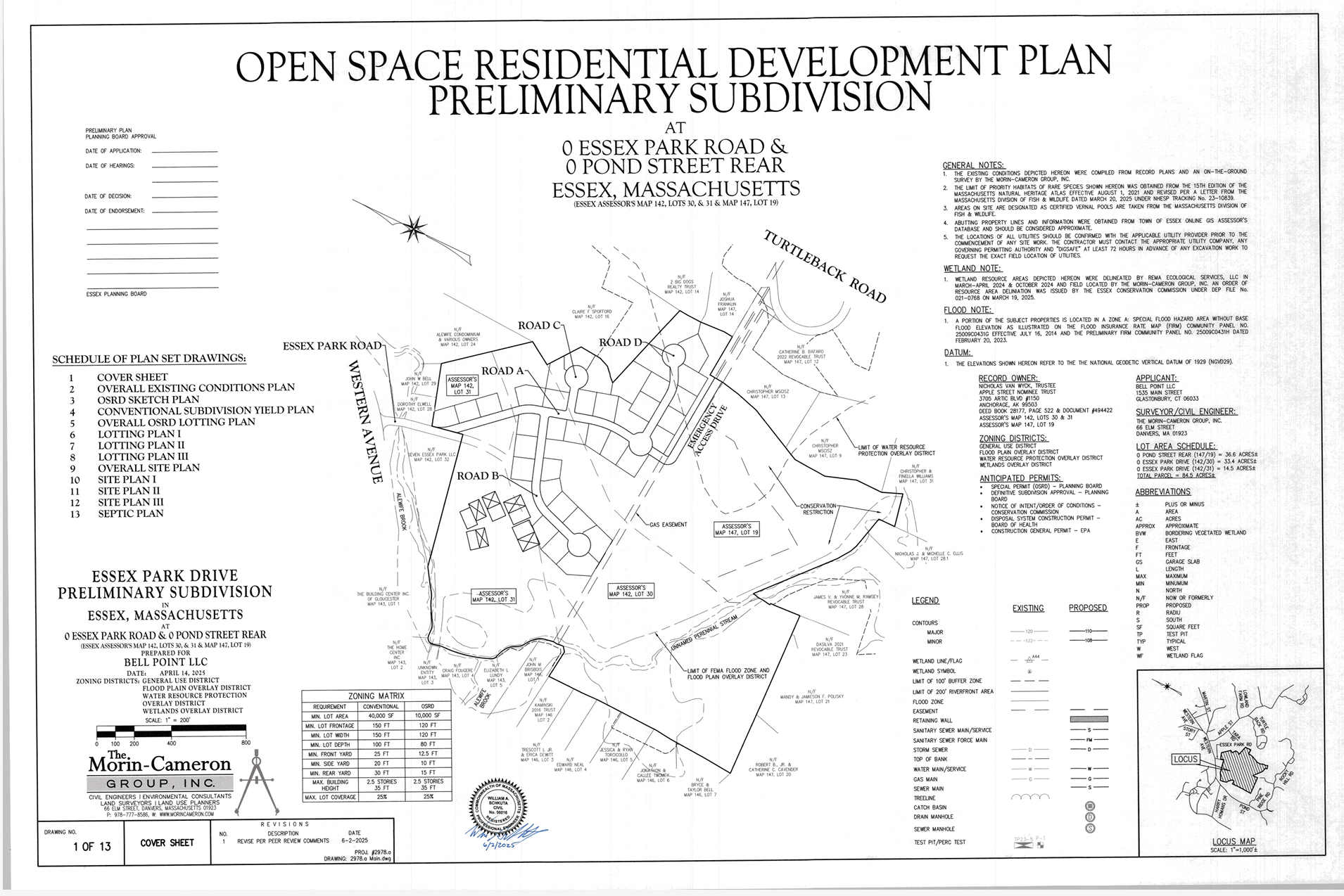
The proposed OSRD project in Essex has sparked discussion because it uses a development model many residents are less familiar with. Unlike conventional subdivisions that spread homes evenly across a site, OSRD concentrates homes on one portion of the land to protect remaining acreage as open space.
This approach is often framed as a compromise between conservation and housing production — allowing some development while preserving natural areas, wetlands buffers, and scenic landscapes.
What’s being proposed for the site
Publicly discussed plans describe a residential subdivision using OSRD rules to cluster homes while preserving a significant portion of the parcel as protected open space. The number of homes allowed under OSRD can exceed what would be permitted under conventional zoning, which is part of what has raised questions locally.
Supporters view OSRD as a tool to prevent sprawl and protect open land. Opponents worry about increased density and potential impacts on traffic, schools, and neighborhood character.
Why OSRD is different from conventional subdivisions
Conventional subdivisions typically maximize the number of buildable lots spread evenly across a site. OSRD flips that model by prioritizing preservation first, then placing homes in clusters to minimize environmental impact.
This can result in fewer roadways, more contiguous green space, and better protection of wetlands and flood-prone areas. However, because OSRD may allow slightly more homes than standard zoning, it can feel like a density increase to neighbors.
What residents are concerned about
Common concerns include traffic increases on local roads, strain on municipal services, and whether preserved open space will be truly protected in perpetuity. Residents also want clarity on who maintains open areas and how public access (if any) is handled.
These questions are typical of OSRD proposals and are usually addressed through conditions placed on approvals and long-term conservation restrictions.
Why this matters for homeowners, buyers, and sellers
OSRD projects can shape the housing mix in a community by adding new homes while preserving large tracts of open space. For buyers, this may introduce new inventory in a town with limited supply. For homeowners, clustered development can concentrate change in one area rather than dispersing it across multiple neighborhoods. For sellers, increased inventory can influence competition and pricing dynamics.
How Essex uses OSRD tools will signal how the town balances conservation with housing needs.
What happens next
OSRD proposals move through planning board review, environmental analysis, and public hearings. Design details, density, road layouts, and conservation restrictions can change as feedback is incorporated. Final approvals typically include long-term protections for open space.
Frequently asked questions: OSRD subdivision in Essex
What does OSRD stand for?
OSRD stands for Open Space Residential Design, a subdivision model that clusters homes to preserve open land.
Does OSRD allow more homes than regular zoning?
OSRD can allow slightly higher density than conventional zoning in some cases, which is why it can be controversial.
Is the preserved open space protected forever?
Typically, OSRD approvals include permanent conservation restrictions, but details depend on final permit conditions.
Will an OSRD subdivision increase traffic?
Traffic impact is a common concern and is usually addressed through traffic studies and mitigation measures.
How could this affect home values in Essex?
Adding new homes can increase inventory and choice, while preserved open space can help maintain the town’s rural character. Impacts vary based on design and location.
For more information visit the Town of Essex website
▶ Watch the full YouTube video
Get the complete conversation, nuance, and local context.
🎧 Listen to the Unlisted podcast
Prefer audio? Listen to the full episode wherever you get your podcasts.
Whether you're simply thinking of buying or selling a home, or know someone who is, we're here to ensure your real estate experience is a great one. Let us help you find your dream home or investment property.